Monday, January 20, 2014

does radiator stop leak actually work?

This is a pretty tough question to answer because people from both sides of the fence will give good reasons why or why not.so I will answer this question by my personal experience.
I purchased a vehicle AS IS from a guy,It drove great, ran fine but when I got it home I noticed the low coolant light was on and when I checked it the radiator was almost empty,I filled it and let the vehicle run and yet it leaked out.Not having money to repair it properly,I decided to try Bars radiator stop leak.long story short the vehicle is running great with no leak.
The people who say it doesn't work may be right as well,according to their experience but,I assume it depends on the individual case.

how to take a tire off of a rim without special tools

Well this is something I have done many times,not wanting to spend the money it takes to have a shop do it,I learned to do it myself,quite efficiently.
First thing is to make sure you have a second vehicle to use as weight,second is to make sure you have a board either a 2 by 4 or wider that is around 3-4 feet in length.Also make sure to remove the valve from the stem of the tire that you are removing.
Once all of the air is out of the tire lay it on the ground,take the board that you have and place one end right up against the rim over top the tire like shown in the picture.ensuring that when pressed down the board will clear the rim while being as close as possible.
Next you should drive the driver side tire of your vehicle on to the board until you hear a pop which is the bead popping off the rim.if this is not successful the first time rotate the tire a quarter turn and repeat.it will successfully pop the bead off.once you complete the top side flip the tire and repeat on the other side.

Next comes the more physical part.with two flat head screw drivers,start prying the tire over the rim leaving one screw driver to ensure it doesnt fall back down until you have pulled the front bead over the ream all the way around.then you must do the same with the second bead taking it of from the same side of the rim.

what are hiccups and what causes them?

hiccup, medically known as SDF (synchronous diaphragmatic flutter) orsingultus, is a sudden, involuntary contraction of the diaphragm which occurs at the same time as a contraction of the voice box (larynx) and total closure of the glottis, effectively blocking air intake. The glottis is the middle part of the larynx, where the vocal cords are located.
Hiccups may also be spelled "hiccoughs".
Experts are not sure what causes hiccups and why we do them. Most agree that they are often triggered by minor stomach upsets. Sometimes, hiccups are said to have a psychological, rather than a physical cause - however, nobody really knows.
In the majority of cases, hiccups resolve without any treatment within a few minutes.
Hiccups, which can occur individually or in bouts, commonly happen rhythmically - the interval between each hiccup is relatively constant. Most people find them to be a minor nuisance. However, prolonged hiccups can became a serious medical problem and require treatment.Prolonged hiccups affect men much more than women. When attacks last longer than a month, the hiccups are termed intractable.

how to build a simple electric motor

The motor described here is not useful for much without a lot of extra tweaking and fortifying but it is definitely a cool science project.

first you will need 1 D sized battery then you will need about 3 feet of small single strand wire with enamel coating (not the thick coating on typical wire).you will need 2 paper clips 1 circular magnet about 1 inch (magnet  size doesn't have to be exact as long as it is strong enough and has 2 distinct poles.) the last things you will need are tape and needle nose pliers.

first take the 2 paper clips and unfold them then on one end form a cradle by taking the needle nose and twisting one end into a tight circle.do this to both paper clips.

then take the paper clips and tape one to each terminal of the battery with the circles you made in the paper clips going the same direction ( this is where the rotor will sit so position them even).

next take your wire and coil it around the D battery leaving 2 inches on each end sticking out pull the coil off the battery and secure the coil from unraveling by sticking the two ends and wrapping them around the coil on their respective sides.

then straiten the ends of the coil as straight as possible and place one end into one paper clip and one into the other.

if the coil is balanced and paper clips are the same height your are ready to place the magnet under the coil right onto the battery.Then just give the coil a little hand and watch it spin!!

Friday, January 17, 2014

how to make a simple layden jar

A layden jar is essentially a capacitor for static electricity.Simply done you just need an insulating vessel with aluminum foil on the inside with a wire on it to act as a collecting brush.to charge just rub a balloon or pvc over the "brush" once charged you can discharge by touching something grounded to the brush.It is very simple.I will put some pics to help illustrate.

Tin can cannon

This is a project that I took on as a child but still could have hours of fun with it today!!!!!

All you need is
4 tin cans (like the ones your veggies come in) all the same size
Electrical tape
lighter fluid
lighter

First take 3 of the cans and cut the tops and bottoms out of them.Stack them end to end and tape them really good so that they are sealed.with the 4th can it should be like tomato sauce or something easy to get out through small holes,because you just need to take an old fasioned can opener and go around the edges making triangles all the way around it.and on the bottom just put a small hole in the center.then tape it to the others with the small hole out and the triangles facing the other cans.then all you have to do is put lighter fluid through the hole put a tennis ball in the other end and light the fumes coming out of the hole.and boom!

Monday, October 14, 2013

Principles of a homemade generator (SCIENCE PROJECT?)

                 I think the proper way to explain this one is to sprinkle some Material ideas, and construction ideas in with the explanation of how it works.So that you won't be constricted by one way to do it.

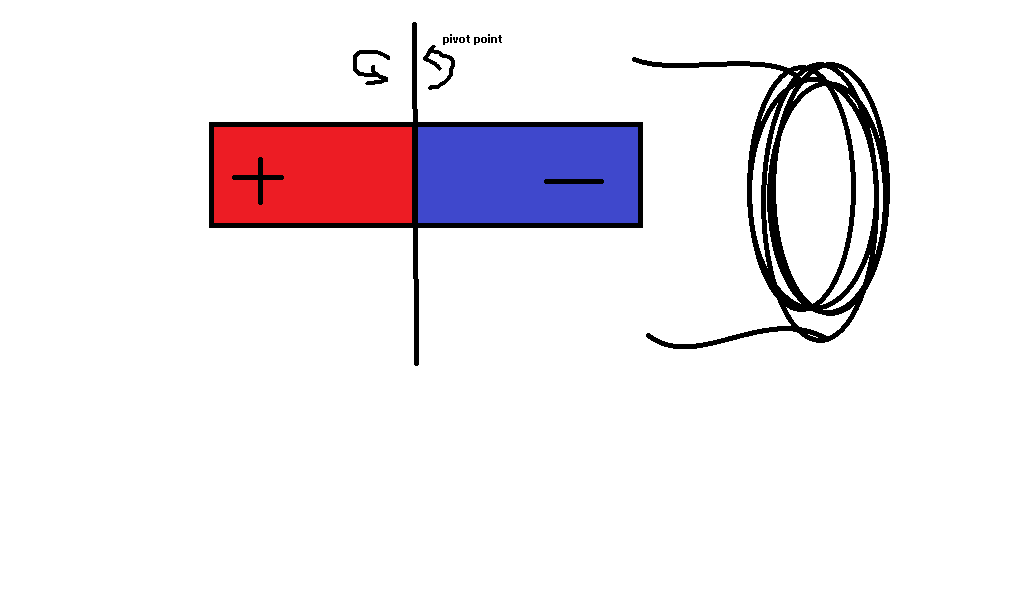
                  In a simple generator you have a coil of wire and a magnet with defind north and south poles (such as a rectangle magnet). If you rotate the magnet close to the coil(s) a small electrical current will be produced from the leads coming off the coil(s).


There are no confines when it comes to how to build a usable generator. You can take a 20 oz bottle with a magent inside that has an axle through the center and coil the wire around the bottle and rotate the magnet.My intent is to not give directions on contruction but only principle.There are more complex or more basic ways to construct one so play around with it and post them in the comments.

Wednesday, October 9, 2013

How to build a simple handheld EMP device.

An EMP (Electromagnetic pulse) can and will ruin electronics so BE CAREFUL!!!!!!!!!

Materials needed:

1 disposable camera

3-5 feet of insulated copper wire (about the same gauge as the average speaker wire will do)

1 metal rod (or non-metal,but metal delivers better results.Best to use iron.)

Tools needed:

Wire cutters

Soldering gun and solder

Maybe some electrical tape

Preparing the Camera:

This is fairly simple.I suggest removing the battery then pressing the shutter button to make sure that the flash capacitor is discharged.
Then you just have to remove the flash bulb.I do this by taking my wire cutters and cutting both sides of the bulb where the glass ends and the metal begins.

What we are trying to accomplish here is to use the bulb leads as our solder points for the coil we will later attach.

Constructing the coil:

Grab your metal rod which should be about 2-3 inches long and anywhere from 1/2 to 1 inch in diameter.

Leaving yourself a lead of about 3 inches, begin winding your wire around the rod.keep the coils tight.make sure to leave yourself a lead on the other side that measures 3 inches.It might be helpful,once done winding, to wrap a little electrical tape around the coil.

Putting it all together:

Just solder one lead to from the coil to one lead from the flash and solder the other lead from the coil to the other lead of the flash.

Replace battery.

press the flash button to charge the capacitor.When you press the shutter button,if done properly, it will produce an EMP.

Testing:


Find an old piece of battery powered electronics that you won't miss,such as a calculator, and charge your device by pressing the flash button,hold the coil close to the calculator, then press the shutter button................................The calculator should have gone off and may not come back on.If not check your handy work.


Horseshoe regulations and rules


RULE 1 - COURT LAYOUT

Section A. PERMANENT GROUND LEVEL COURTS
1. Dimensions - A horseshoe court shall be a level rectangular area 6 ft wide and a minimum of 46 ft long. A north-south setting is recommended for outdoor courts to minimize the effects of the sun.
2. Pitcher's Box - The pitcher's box is the square 6 ft by 6 ft area at each end of the court. It is composed of 2 parts - 1) the pit, and 2) the pitching platforms.
a. PIT - The pit is a rectangular area filled with the substance onto which the shoes are pitched. Its maximum length (in the direction in which the shoes are pitched) is 72 inches and its minimum length is 43 inches. Its maximum width is 36 inches and its minimum width is 31 inches. The pit must be centered in the pitcher's box. If the pit is less than the maximum dimensions, the extra space shall be filled with the same material of which the platforms are made, or some other material different than the pit substance, and shall be level with the pit and platforms.
b. Pitching Platforms - The pitching platforms flank the pit to its left and right sides and are parallel to each other. They shall be level with each other and to the top of the pit. They shall be 18 to 20-1/2 inches wide (depending upon the width of the pit) and shall be a minimum of 6 ft. long.
3. Stakes - The stake is the target at which the shoe is pitched. Each stake shall be centered between the platforms with a minimum of 21 inches from the stake to the front and back of the pit. On regulation courts the stakes are 40 ft. apart. This is measured from the front of each stake level with the pitching platform. Stakes shall be 1 inch in diameter and may be made of cold-rolled steel, mild iron, soft metal or synthetic material. Each stake shall be no shorter than 14 and no higher than 15 inches above pit level and they shall both have an approximate 3 inch lean toward each other.
4. Pit Substance - Clay, sand, dirt and synthetic compositions are all legal substances to put in the pit. The minimum depth of the substance shall be 4 inches. An 8 inch depth is recommended.
5. Extended Platforms - The pitching platforms on either side of the pit shall be extended forward (toward the opposite pit) an additional 10 feet to accommodate pitching at shorter distances. The front of the extended platforms shall be 27 feet from the opposite stake. The extended platforms shall be level with and be of the same width and material as the full-distance platforms. It is recommended that the 14 feet between the front ends of the platforms be filled in to provide a continuous level walking surface between the two pitcher's boxes.

6. Backboards & Protective Barrier
a. Backboards - Every pit should have a backboard. It should be at least 4 feet behind the stake, be at least 1 foot high and extend the width of the pit. For spectator visibility, a mesh netting or chain link material is recommended. If of solid material, it should be a color that will provide a contrasting background so as to keep the stake visible for the contestants.
b. Protective Barrier - All court complexes shall be surrounded by a protective barrier. The barrier should be at least 8 feet behind the stake. A chain link type fence at least 4 feet high is recommended.
7. Foul Lines - Foul lines shall be defined by lines extending across the front of the full-distance and extended platforms. This places them perpendicular to an imaginary line between stakes at 37 and 27 ft. respectively from the front of the opposite stakes. (Measured at the level of the pitching platform).
8. Imaginary Stakes - Imaginary stakes shall be marked midway between the left and right extended platforms at a distance of 30 feet from the opposite stakes. They shall also be marked on the full-distance platforms at a distance of 40 feet from the opposite stakes if the stakes are not 40 feet apart.
Section B. COVERED AND INDOOR COURTS
The regulations for covered and indoor courts are exactly the same as for permanent ground level courts with the additional stipulation that they shall have a minimum 12 foot vertical clearance to the lowest possible obstruction.
Section C. TEMPORARY AND/OR RAISED COURTS
The regulations for temporary and/or raised courts are the same as for permanent ground level courts with the exception that for any raised court, the top of the pit shall be no more than 7 inches above the level of the pitching platforms. In addition, the 4 inch pit substance requirement is recommended, but not mandatory.The 40 ft. distance for elevated platforms shall be measured from the front of the bottom of the stake, at floor level before the substance is put into the pit.


RULE 2 - PLAYING EQUIPMENT - THE HORSESHOE
Section A. Legal Shoes The sport of horseshoes is played with specially manufactured equipment. Any official (legal) horseshoe must be sanctioned and approved by the NHPA and must pass the following maximum weight and measurement standards. (there are no minimum standards): 1) It shall not weigh more than 2 pounds, 10 ounces; 2) it shall not exceed 7-1/4 inches in width, 7-5/8 inches in length and, on a parallel line 3/4 inch from a straightedge touching the points of the shoe, the opening of the shoe must not exceed 3-1/2 inches. (A 1/8 inch tolerance to 3-5/8 inches is allowed on used shoes.) No part of the original manufactured shoe may exceed one inch in height. Shoes not meeting these requirements shall not be used in NHPA sanctioned competition and all games pitched with illegal shoes shall be forfeited. All horseshoes used by a pitcher may be checked at any time to verify they are legal shoes for weight, measurement and altered shoes. This checking will be done by a judge or other tournament official.
Section B. ALTERED SHOES Any shoe which has been changed from its original design (calk, notch, etc.) shall be considered an "altered" shoe. An "altered" shoe is illegal and cannot be used in sanctioned play.


RULE 3 - PITCHING DISTANCES
Section A. Males
1. Juniors - Junior contestants may pitch from any place on either the full-distance or extended platforms. They must observe the 27 foot foul lines.
2. Open Men and Seniors - All Open Men and Senior contestants shall pitch from on or behind the full distance platforms adjacent to the pits and observe the 37 foot foul lines. Physically impaired males in these categories may be given permission by the governing NHPA officials to move on to the extended platforms and observe the 27 foot foul lines.
3. Elders - Elders are classified as short-distance pitchers, shall pitch less than the full-distance, and observe the 27 foot foul line.
Section B. Females - All female contestants may pitch from any place on the full-distance or extended platforms and observe the 27 foot foul lines, except that any woman pitching in an Elders class must pitch less than 40 feet.

RULE 4 - PIT PREPARATION AND MAINTENANCE
Section A. Every effort shall be made to keep the substance in the pit in soft putty-like condition so the shoes will not bounce or move around after coming in contact with the substance. The substance in the pit shall be watered (if necessary) and leveled to the top of the surrounding platforms (unless the pits are raised) before a game starts. Each contestant is responsible for one pit, but a contestant may have someone else do the preparation. During a game, a contestant shall not step on, mash, or otherwise repair any of the substance in the scoring area of the pit without the consent of the opponent or a tournament official. Repair needed because of a measured shoe or a shoe which was "buried" shall be handled using the same guidelines.
NOTE: Pits composed of sand or dirt often "hollow out" after a few innings. A blanket statement by the tournament director (made before competition begins) shall allow the leveling of these courts as needed without constant consent between the contestants.
Section B. With the permission of the tournament committee, the stakes may be painted for visibility purposes before a game starts. This procedure shall not be done while a game is in progress, unless both contestants agree to do it.

RULE 5 - GAME PREPARATION
It is customary for contestants to find out their court assignments and warm up on the court for their first game with the proper opponent. The court should be prepared for play during this time. When the tournament official announces the start of play, the contestants shall flip a shoe or coin with the winner having the choice of first or second pitch.
After a game is completed, a contestant shall go to the next assigned court and prepare one pit for play. When the other contestant arrives, the same procedure shall be followed. When both contestants have arrived and prepared the pits, they may pitch four warm up shoes each and then must start their game, using the method in the previous paragraph to decide first pitch. It is legal for a contestant to practice alone if the second contestant is late in arriving.

RULE 6 - PLAY OF THE GAME AND VALUE OF THE SHOE
Section A. Innings The game is broken down into innings. Each inning consists of four pitched shoes, two by each contestant.
Section B. Value of the Shoe
1. Ringer - A ringer is a shoe which comes to rest encircling the stake. A straightedge touching both points or any part of the heel calks of the shoe must clear (not touch) the stake in order for a shoe to be declared a ringer. A ringer has a value of three points.
2. Shoe in Count - A shoe which is not a ringer but comes to rest with any portion of it within 6 inches of any part of the stake is a shoe in count. A shoe in count has a value of one point. A "leaner", or any other shoe which is touching the stake (but not a ringer), is considered a shoe in count and has a value of one point.
3. Shoe Out of Count - A shoe which comes to rest further than 6 inches from the stake is a shoe out of count and has no scoring value. A shoe which is declared to be a foul shoe (see Section H) is considered to be a shoe out of count (no matter where it comes to rest).
Section C. Delivery of Shoes
1. The contestant pitching first shall deliver both shoes (one at a time) and then the other contestant shall deliver both shoes (one at a time). A contestant may deliver the shoes from either the left or right platform but, in any one inning, both shoes must be delivered from the same platform. A contestant shall pitch the entire tournament with the same hand or arm, except in the case of a medical emergency.
2. A contestant shall deliver both shoes within 30 seconds. The time shall start when the contestant steps onto the platform with the intention of pitching. (As opposed to retrieving shoes or removing foreign material from the platform).
NOTE: Extra time taken to repair a damaged shoe by filing a burr, etc., or a delay resulting from a distraction not caused by the contestants, shall not be penalized.
Section D. Position of Contestants During Delivery
1. THE PITCHER. The pitcher must maintain constant contact with the designated platform during the entire address and release of the shoe.
Exceptions:
(a) A contestant observing the 37 ft foul line may start directly behind the platform provided they step within it when they release the shoe.
(b) A physically challenged contestant must have at least some contact with the platform and be completely behind the 27 ft. line when the shoe is released.
2. THE OPPONENT. The opponent, while not pitching, shall stand on (or behind) the other 40 ft. platform at least 2 feet to the rear of the contestant who is pitching. The opponent shall be quiet and stationary so as not to disturb the contestant who is pitching or the contestants on adjacent courts. After a short distance contestant pitches first they must return to the 40 ft. platform if the opponent or any contestant on an adjacent court is a full distance pitcher.
3. THE CONTESTANTS. If both contestants use the same platform to deliver their shoes, the contestant pitching first should cross over to the other platform in front of the pit and then move to the proper position. (see #2) As the first contestant is crossing in front the second contestant should be crossing over in back and mounting the platform from the rear. If both contestants use opposite platforms, the contestant who pitches first should step directly back to the proper position described in #2 of this section.
4. No contestant shall walk to the opposite stake (except to remove a foul shoe) or be informed of the position of any pitched shoes prior to completion of an inning.
Section E. Flow of the Game
1. Once the four shoes in an inning have been pitched, the contestants shall walk to the other end to determine the score for the inning and retrieve their shoes. No shoe shall be moved before its scoring value is determined. If the decision is in doubt, a judge shall be called. The judge shall make the necessary measurement(s) and determine the scoring for the shoes in question. (Contestants are encouraged to carry measuring devices and to make their own decisions whenever possible to help speed up play.) Play shall continue in similar fashion in each inning until the game limit is reached.
2. At any one time, a contestant shall carry and use only two horseshoes during the course of a game. A spare shoe or shoes should be kept available at court side in case of a broken shoe or if the contestant desires to switch shoes. Shoes may be switched between innings, but not during an inning unless a shoe breaks (see Section F).
3. If it is discovered during an inning that a contestant has pitched the shoe of an opponent, the shoes shall be picked up and the entire inning shall be repitched using the correct shoes. If the contestants fail to discover the error until after all four shoes have been pitched, the inning shall be scored on the basis of whatever shoes they pitched. If agreement cannot be reached, a judge shall be called. Based upon the input from the contestants, the judge shall either determine the scoring for the inning or void it and order it to be repitched.
4. When a shoe is being measured by a contestant and it (or the stake) is accidentally moved, the inning shall be scored only if the contestants can come to an agreement. If no agreement can be reached, a judge shall be called. As in (3) above, the judge shall either determine the scoring or void the inning and order it to be repitched.
EXCEPTIONS: If one or more shoes (are obvious ringers and have been agreed to by the contestants) are moved to make a measurement they need not be repitched. Only the shoe(s) in question when the shoe or stake was moved must be scored or ordered repitched by the judge. If one or more shoes are below the shoe(s) in question, they will be scored and remain in place for the repitch. No scored shoes will have the scoring changed due to a repitch.
NOTE: If a judge moves a shoe (or the stake) while making a measurement, the judge shall either determine the scoring for the inning or void it and order it to be repitched.
5. It is legal for a contestant to carry and use a blunt ended hook or shoe pick-up device not exceeding 36 inches in total length. Any hook on the device cannot protrude more than 2 inches from the main shaft. Care should be taken in using the hook so as not to endanger the opponent. Also, contestants are encouraged to carry a file and towel to keep their shoes smooth and shoes and hands clean and dry.
Section F. Broken and Cracked Shoes
1. Broken Shoes
a. If a shoe breaks into two or more parts when it hits the stake or lands in the pit, the parts shall be removed and another shoe shall be allowed to be pitched in its stead. If the shoe broke when striking the backboard or other "foul" ground, it is foul and may not be repitched.
b. If a shoe has landed in the pit and becomes broken by having another shoe land on it, it shall be scored as it appears to lay. If there is any disagreement, a judge shall be called. The judge shall either determine the scoring for the inning or void it and order it to be repitched.
2. Cracked Shoes - If a shoe is discovered to be cracked (but not completely broken in two), it shall be scored as it lays. Once the scoring is determined, it shall be replaced.
Section G. Broken Stakes A broken stake is defined as any stake not in the same position as when the game started, and when both contestants agree that it is broken. When the stake breaks during an inning, the game shall be discontinued at the end of the previous inning and the stake replaced. If a stake breaks as the result of being struck by the fourth shoe of the inning, then it shall be counted. If they cannot agree, then a judge shall be called. The judge shall either determine the scoring for the inning or void it and order it to be repitched. (Once the scoring is determined, the tournament officials may decide to complete the game on another court or hold the completion until a later time.) If not, once the stake is replaced, the contestants may take four warm up shoes each (if they so desire) and play shall resume.
Section H. Foul Shoe A foul shoe is a shoe which was delivered in non-compliance with one of the rules of the game. It scores as a shoe out of count and is to be removed from the pit (if it is in the scoring radius of the stake) before any more shoes are pitched. Shoes already in the pit that have been disturbed by a foul shoe are not to be removed, unless they were knocked into foul territory and are returned to the scoring area.
1. The following are rule violations that must be spotted and called by an assigned judge. The penalty is to declare the shoe a foul shoe.
(a) Any shoe pitched when the contestant has made contact with the foul line before the shoe is released.(Rule 1,#8)
(b) Except as provided in rule 6, D, 1, any shoe pitched when the contestant has started or stepped completely outside the pitching platform before releasing the shoe.
(c) Any shoe not delivered within the thirty second time limit. (Rule 6, Section C, #2).
(d) One shoe when a contestant has illegally stepped on the scoring area of the playing surface. When this violation occurs, the contestant shall pitch only one shoe in the next inning. The second shoe shall be carried to the other end. (Rule 4, Section A).
(e) The second shoe, if it is pitched from a different platform than the first shoe. (Rule 6, Section C)
2. The following occurrences are also considered foul shoes and the shoes must be removed from the pit (if they are in the scoring radius of the stake) before any more shoes are delivered.
a. Any shoe which contacted the background, court frame, or any ground outside the pit before it came to rest.
b. Any shoe which struck a previously defined object such as a tree limb, wire, indoor court ceiling, etc.
NOTE: A shoe which strikes a foreign moving object is not foul and may be repitched.
c. The second shoe if the contestant changes shoes after the first shoe has been pitched. The only exception is if the first shoe has broken in two and qualifies for a repitch.(Rule 6 Sec E, #2)
d. Any shoe that leaves a contestant's hand once the final forward swing of the delivery process has started shall count as a pitched shoe. If it touches any ground outside of the target pit, it shall be counted as a foul shoe. A shoe that is accidentally dropped by a contestant before the final forward swing has started shall not be considered foul and may be picked up and pitched.
3. A contestant's shoes shall be called foul if the contestant removes any shoe before the scoring of that shoe has been agreed upon. A judge shall be called if a decision cannot be reached. The judge shall determine the scoring for the inning.
Section I. Protests If a contestant desires to make a protest, the protest shall be made to the judge or tournament official at the time the problem occurs. The tournament committee shall make the final ruling on all protests.

RULE 7 - LENGTH OF THE GAME
The length of a game shall be determined before play begins. There are two options:
1. Point Limit - The game shall be played to a predetermined number of points. 40 points is the suggested amount. The first contestant to reach (or exceed) that amount is the winner.
2. Shoe Limit - The game shall be played to a predetermined amount of shoes. It shall be an even number. When that amount is reached, the contestant with the highest score is the winner. If the score is tied, there are two options:
a. Each contestant shall receive 1/2 win and 1/2 loss. (This option should be used if a handicap system is in effect.)
b. A two inning tie-breaker shall be played, using the same method of play that was used in the game. In the event of another tie, the same process shall be repeated and this procedure shall continue until the tie is broken.

RULE 8 - SCORING THE GAME - SINGLES PLAY
There are two methods of scoring in horseshoes - cancellation and count-all.
Section A. Cancellation Scoring
1. In cancellation scoring, only one contestant can score in each inning.
a. Ringers - Ringers cancel each other. A ringer of one contestant shall cancel a ringer of the other contestant those shoes shall not score any points. Any uncancelled (live) ringer scores three points.
b. Shoes in Count - A shoe in count shall score one point under the following conditions:
1. If there are cancelled ringers and no live ringer, the closest shoe in count to the stake shall score one point.
2. If there are no ringers, the closest shoe in count shall score one point. If the other shoe of that same contestant is the second closest shoe in count, it shall also score one point.
3. If there is one uncancelled ringer and the other shoe of the scoring contestant is the closest shoe in count to the stake, it shall score one point (four points total).
NOTE: Opposing contestant's shoes in count that are touching the stake or are determined to be an equal distance from the stake shall cancel each other and, like cancelled ringers, shall score no points. In that situation, the next closest shoe in count, if there is one, shall score one point.
2. Calling the Score
a. Points shall be awarded in the following situations. The contestant scoring the points shall call the score.
1. No ringer with the closest shoe in count - call "one point".
2. No ringer with the two closest shoes in count - call "two points".
3. One ringer with either no shoe in count or the other contestant having the closes shoe in count - call "one ringer, three points".
4. One ringer with the closest shoe in count - call "one ringer, four points".
5. Two canceled ringers with the closest shoe in count - call "one ringer each, one point".
6. Two cancelled ringers with one uncancelled ringer - call "three ringers, three points".
7. Two uncancelled ringers - call "two ringers, six points".
b. No points shall be awarded in the following situations. The score shall be called by the contestant who pitched second.
1. All four shoes out of count - call "no score".
2. Two cancelled ringers with no shoes in count or with the other two shoes an equal distance from the stake - call "one ringer each, no score".
3. Four cancelled ringers - call "four dead".
Section B. Count-all Scoring
In count-all scoring, both contestants receive credit for the number of points their own shoes are worth in each inning. Because both contestants can score in the same inning (each contestant can score either zero, one, two, three, four or six points in each inning), care should be taken in reporting the scores to the scorekeeper so that the proper score is recorded for each contestant.
Section C. Recording the Score
In tournament play, the score sheet (not the scoring device) shall be the official record of the game. Contestants are encouraged to pay close attention to the score at all times. If a question or discrepancy occurs regarding the correct score, the contestant(s) may approach the scorer between innings or during their half inning to rectify the situation. If the discrepancy cannot be corrected to the satisfaction of both contestants, a tournament judge shall be called to make the final decision.
RULE 9 - PITCHING ROTATION DURING THE GAME
Section A.
If the game is to be played under cancellation scoring, there are two ways to determine who shall pitch first in the next inning once the game has started. The method to be used shall be determined before play begins.
1. The contestant who scored in the preceding inning shall pitch first in the next inning. If neither pitcher scores,the contestant who pitched second (last) in the preceding inning shall pitch first in the next inning.
2. Alternate Pitch - Alternate first pitch is used to guarantee each contestant an equal amount of first and second pitches during a game. It can be done in three ways. If the game is to be played to a shoe limit, it is recommended that the limit be a number divisible by four.
a. One contestant shall pitch first in innings 1, 4, 5, 8, 9, 12, 13, 14, 15... until the game is completed. (This is the fairest, and recommended,way.)
b. One contestant shall pitch first in innings 1, 2, 5, 6, 9,10, 13, 14... while the other contestant shall pitch first in innings 3, 4, 7,8,11, 12, 15, 16... until the game is completed.
c. One opponent shall pitch first from one end and the opponent shall shall pitch first from the other end.
Section B
Any game played using count-all scoring shall be played under an alternate pitch format found in Section A, 2 above.
Section C
Any game played under any kind of handicap system shall use an alternate pitch format.
Section D
If it is discovered during an inning (before all four shoes are pitched) that the wrong contestant has pitched first, the shoes pitched so far in that inning shall be picked up and the inning shall be repitched. If the error is not discovered until after all four shoes have been delivered, they shall be scored as they lay and the correct rotation shall be re-established for the rest of the game.

RULE 10 - DOUBLES PLAY
In doubles play, two contestants are partners against another team of two contestants. One contestant from each team shall be at each end of the court and the contestants shall be matched by the tournament officials to that the highest rated contestant (by percentage) from each team shall be at the same end. The tournament committee shall determine the length of game and type of play and the scoring shall be done on one score sheet, just like for singles play. When contestants are pitching their shoes, the contestants at the other end shall be well behind and to the side of the pitcher's box (for their own safety) and in a stationary position so as not to disturb the contestants on their own and adjacent courts. Otherwise, all rules for singles play shall apply.
Section A Regular Doubles
In regular doubles, each team uses one pair of shoes and the contestants stay at the same end of the court for the entire game. To begin the game, the highest rated contestants shall decide first pitch and pitch their shoes, just as in singles competition. Their partners at the other end shall decide and call the score, retrieve the shoes and pitch them back and the same procedure is followed. The decision on who pitches first in each inning is contingent upon the scoring system being used, following the rules of singles play.
Section B Walking Doubles
In walking doubles all contestants pitch their own shoes. The highest rated contestants will decide first pitch and pitch their four shoes from the official designated starting end to start the game. A single score sheet shall be used that clearly shows the ringers and shoes of each contestants.

1. When a shoe limit game is scored after each eight (8) shoes (double inning), the lowest rated contestants will decide first pitch and pitch their four (4) shoes. After all eight (8) shoes have been pitched contestants walk to the other end, decide on the scoring, and pick up their shoes. The highest rated contestants always pitch first and their score is recorded first after each set of eight (8) shoes. The decision on which contestant pitches first in subsequent innings is contingent upon the scoring system being used following the rules of singles play. This procedure continues until the game is over.

2. When a point limit game is scored after each inning four (4) shoes, the lowest rated contestants determine the score of the four (4) shoes their partners pitched. The partner of the scoring contestant (or the last contestant who pitched in case of a no score situation) calls the score and pitches first. After all eight (8) shoes have been pitched the contestants walk to the other end. The highest rated contestants pick up their shoes (already scored) and step back. The score of the last four (4) shoes pitched is determined and called to the scorekeeper. The contestant calling the score always pitches first. This procedure is continued until the game is over. For safety or other reasons, the tournament director or committee may effect an alternative walking sequence as long as the proper scoring sequence stays the same.

RULE 11 - APPROPRIATE NHPA MEMBER CONDUCT>
Section A. On the Courts
An NHPA member, while in competition, shall make no disturbing noises or movements that would distract the opponent or competitors on adjacent courts. The first offense shall call for a warning from the judge or tournament official. A second offense shall call for a forfeiture of the game being played. Any further offenses shall call for a forfeiture of all games.
Section B
Any NHPA member who indulges in heckling, unfair rooting, or any other form of unsportsmanlike conduct toward any NHPA member or tournament official, shall be subject to expulsion from the tournament and the tournament site. This covers any inappropriate behavior (including profane or abusive language) in, or around, the court area. The member shall also be subject to a one year suspension from the NHPA.

RULE 12 - TOURNAMENT PLAY
Section A
The standard method of NHPA sanctioned tournament play is round-robin play with contestants being seeded into classes. Each contestant will play every contestant in the class.
Section B
At the end of round-robin play, class winners shall be determined by win-loss records or ringer percentage. In addition, total points may be used if the scoring was done using the count-all method. If ties occur, they shall be settled by playoff, who-beat-whom or one of the other methods that was not used to determine the winner. The tournament committee shall decide how winners are to be determined and how ties are to be broken and announce these procedures before tournament play begins. If playoff games take place, the method of play and the length of the games shall be decided by the tournament committee.
Section C
A contestant's ringer percentage shall be determined by dividing the total number of ringers by the total number of shoes pitched. Shoes pitched in playoff games and in extra innings pitched because of tie games shall be included in these totals.
Section D
The rules used to seed contestants in all NHPA sanctioned tournaments are found in Articles X-XII of the NHPA Bylaws. In addition, rules regarding game length and format and tie-breaking situations in State, Regional,National, and World Championship play are found in the same Articles. The NHPA Dress Code for World Tournament play is found in Article X. It's use is encouraged, but not required, for all NHPA sanctioned play.
Section E Handicapping
Handicapping may be used in open tournaments and league play. The amount of the handicap shall be determined by the tournament committee. Game handicapping shall not be used in any World, National, or Regional Tournament or in the championship class of a designated division of any State Championship Tournament.

RULE 13 - TOURNAMENT AND SANCTIONED LEAGUE ADMINISTRATION
Section A
All NHPA sanctioned tournaments and leagues shall have a designated committee or director to administer the activities. The committee or director shall:
1. Publicize the event.
a. Announce the date, place, entry fee, prize list, registration deadline, and any other information a member will need in order to participate.
b. Announce classifications available to entrants.
c. Announce the method of play (cancellation or count-all), the length of the games (how many shoes or points) and whether or not alternate pitch will be used.
d. Announce the method to be used for handling ties for individual games and at the end of round-robin play.
2. Obtain verifiable ringer percentages from NHPA charter statisticians (or NATSTATS) for all entrants.
3. Set up the playing format, assign contestants to their proper courts and provide contestants with a schedule of games to be played.
4. Make sure all entrants are NHPA members.
5. Arrange for scorekeepers for each court and for their remuneration. The method and amount of pay shall be announced before play begins.
6. Have statisticians available for the compilation of tournament results.
7. Have judges available.
8. Handle all protests and make the final decisions on any items that may come up.
9. Make the decision to halt play because of inclement weather and decide when play shall continue if conditions improve.
10. Make the awards and presentations at the end of play.
11. See that the results are sent to the charter statistician (and NATSTATS) for proper recording.

Section B Judges. 
1. Judges shall be appointed by the tournament committee. Their duties are:
a. To enforce the rules and issue the proper penalties if violations occur.
b. To measure for ringers, the closest shoe to the stake and shoes in count when asked to do so by the contestants.
c. To help make the proper decision in situations involving broken shoes, broken stakes, shoes and stakes moved by contestants during measurements, shoes pitched out of turn and a contestant's shoes mistakenly pitched by the opponent.
d. To act as a liaison between the contestants and the tournament committee in all possible situations.
2. The decision(s) made by judges in 1,a-c above shall be accepted as final by the contestants and the game shall continue on from that point.


Saturday, October 5, 2013

How to put a lawn mower tire on the rim and inflate.

Not always the easiest thing to do at home by yourself.


The First thing you want to do is use a wire brush and clean the part of the rim that the tire is going to contact.Then you could apply a little oil or W-D 40.

You need 2 flat head screw drivers and a hammer.first lay the tire flat on the ground and sit the tire on the rim at an angle.
 
To work the first bead over the rim you need to use your feet or knees and apply pressure downward on the tire while taking your 2 screw drivers and prying the bead over the rim little by little.All the while keeping pressure on the tire until the bead is over the rim.


Now that you have done that you still have one more bead to get over the rim.This bead will be pried on the same way.It is sometimes useful to use a hammer and slightly tap the bead down onto the rim.


With the tire now on the rim it just needs to be inflated!!!

What I always do is put one foot on the rim while pulling up on the tire as hard as I can to make sure one side is sealed.

Then I usually take a 4 ft. piece of rope and go along the outside of the tire compressing the tire to spread the beads so that there is no gap between the rim and the tire so that it will hold air while pumping it up.

Now all you have to do is pump the tire up.Remove the rope  before completely inflating.

Friday, October 4, 2013

Making a lawn mower run on hydrogen.

Running a lawn mower on hydrogen or HHO is a fairly simple yet dangerous task if not executed  properly.

I did a post some time ago about making an HHO generator and here is a great use for it.

First thing to do is remove the carb. completely.Where the hole is that the carb. use to bolt to you want to fabricate a plate with a nipple to attach a hose.its not too difficult it should look like this.


At this point you need to fabricate a way to deliver various amounts of hydrogen or HHO.This is necessary because this will be the throttle.This can be as simple or as advanced as you wish.


once you have that made its as simple as connecting on end to a bottle of hydrogen or an HHO generator and the other to the nipple on the plate you made.then you tinker and adjust.the amount of gas fed to it will control throttle.

I take no resposibility for any accidents.there is potential for explosion.this is an informative post only.

How to make a lawn mower go fast.

These tips increase speed, traction and handling.

One of the first things is to change the pully on the rear end to either a 3" or 5" and change the pully on the motor to an 8" or a 10".this is the best and fastest way to increase speed.To increase traction you can put wider tires on the transaxle and weld the spider gears to make it posi-traction.(which means both tires pull all the time).One of the more obvious mods is to shorten the governor spring.

To make handling better at high speeds you can lower the lawn mower.also you can widen the stance of the lawn mower by welding extensions onto the rearend.


I am working on a lawn mower as a project.I will post picks of all the mods and videos on how I executed the mods.

Wednesday, October 2, 2013

Tips to learning any instrument

These are my tips to learning an instrument.


I underlined my because every musician has their own techniques and opinions.So to be clear I am not saying my tips are the only way, the easy way, the normal way or even the right way.I am simply sharing what has helped me.

1.Practice something.I don't care what it is but you need to put your attention into this "something" (could be a simple lick, a chord or an entire song) While practicing you need to shoot for perfect sound not so much technique.And this is where I expect most musicians to lynch me but whatever.Don't try to learn anything else until you can perform the "something" that you choose with comfort and ease with a sound that is as close to perfect as possible.

2.Learn the names of the chords (or notes) of your chosen instrument and pick one until you learn it,then move on to the next one but don't forget to continue playing the chords you have already learned.

3.This is the most important piece of advice NEVER STOP LOOKING FOR SOMETHING TO LEARN.

How to diagnose problems with a small engine (ie. lawn mower, weed eater or go-cart)


Start SIMPLE!!!!!

What I mean to say is that a large majority of issues with a small engine are simple issues, so there is no need tearing into the engine if it is not required.

Common problems and solutions

1.No oil or gas- Fill all Fluids

2.Fowled spark plug- clean spark plug or simply replace

3.Old gas ( yes gas loses potency over time)-drain and replace with new gas

4.carb. is gunked up- You could try spraying carb cleaner into the air intake side. I suggest removing carb. carefully and doing a full clean out being sure to get the jets cleaned out.when You put it back onto the motor be sure any necessary gaskets are replaced.

Now with the simplest problems and solutions out of the way, it should be said that every motor is unique and needs to be treated as such. I will now give scenarios and describe how I would diagnose and fix the problem.

Motor won't turn or is seized up.

First thing I would do is pull the plug out and saturate the piston with a lubricant ie. oil,transmission fluid or wd-40.also I would lubricate the bearing around the shaft the best that I could. I would let the motor sit for an hour or more then I would try to turn the motor over again.If this frees the motor I would flush the piston with gas to remove lubricant then try to fire up.If it doesn't then I would remove the cover from the piston and look for any obvious problems.I would also (if this is a motor I don't depend on or can live with out I will take a rubber mallet and attempt to free the piston by wacking it.Every couple of wacks I will try to turn the shaft.If this still doesn't work I will remove the crank cover from around the shaft to see if there are any broken pieces of metal stopping the crank from turning.While in there I would try to free the piston by wacking it again like before and attempt to rotate the crank.At this point it will have been freed not to say the motor doesn't have serious damage from what ever caused it to seize but it will turn over if you notice that the inside of the motor has broken metal or shavings, for your own safety please don't attempt to use like it is.

Motor turns but won't crank.

This is an area that we have all run into atleast once in our lives.first thing I do is check the spark plug and clean it if it needs to be.then I check to see if the plug is receiving an arc from the magneto and coil.To do this I will sit the plug on top of the engine in a spot that has good bare metal.And with the spark plug wire attached I will turn the motor over (either pull the chord or turn the key) If I see a spark Then I will put the spark plug back in and try to crank again.If this doesn't fix it I move on to seeing if fuel is reaching the cylinder.If I don't see a spark I will check the condition of the coil and look for any broken wires.if you see an issue address it and ensure that that gap is properly set between your coil and the magnet on your fly wheel.This can easily be done with a business card slipped into the gap and the two bolts loosened on the coil allowing it to drop on to the card then tightening the bolts back.You should then attempt to crank it or see if it is getting a spark.On most engines there is a type of "points" distrubution deal in the engine behind a plate that is located behind the fly wheel you should check the contacts and condition of these points as well as the condition of the wire that attaches.once cleaned and put back together check for a spark if this does not yield one then you should replace your coil.Now if it is sparking but not cranking you need to trouble shoot the fuel intake. I suggest cleaning the carb. in detail and checking all gas lines.you should remember the layout of the do dads on the carb. or better yet take a picture.reassemble the carb.and attach it to the motor prime it with starting fluid and let it rip.This will diagnose the majority of small engine trouble.

If you have any special situations you can feel free to contact me and I would be more than happy to help in any way I can.

Thursday, February 9, 2012

Homemade welder

while this sounds like an impossible task it is really fairly easy to do.It requires at bare minimum 2 microwave transformers and a good length of 10 gauge wire.Instead of explaining this myself I will post some videos and pictures that could do a better job than I could ever do with words.

Thursday, January 5, 2012

Hydrogen or HHO generator principles and functions

Okay this subject is sort of touchy for me because I don't want some kid trying to make an HHO generator and hurting themselves do I will give you details on principle,function,uses and some pics and videos of others constructing said generator but I am by no means telling you to build one they are extremely dangerous.
 The science behind HHO generators.

I am going to go over the "boring" parts first to get them out of the way.An HHO generator produces H2 (hydrogen) and O (oxygen) from water that is made more conductive by adding something to it  ,salt ,for example.But to separate the H2 and O from the H2O it takes energy ,a battery for example,But the battery is NOT simply thrown into salty water,no.You have to find a way to deliver the energy into the water with both a positive and a negative terminal ,which can be done in a thousand ways but most common seems to be with either 2 stainless steel coils one slightly smaller diameter than the other so that they can be placed one inside the other WITHOUT TOUCHING,no contact is to be made between the two coils,it could be very dangerous.Now you have the conductive water,the battery,the coils to deliver energy now you have to have a way to contain the water,coils and HHO once created.One could be creative here and do it however they wanted but there are a few principles to keep in mind 1.HHO is flamable and under pressure explosive 2.If one is to harness and use HHO safety is a huge factor.okay that being said there should be a safety between the capsule that houses the coils and the hose that the gas ultimately exits to be used.This is done simply with a sealed container that is half filled with water in which a hose from the capsule that houses the coils and conductive water should be placed into the safety at the bottom of the water and another hose should be placed into the safety but above the water or connected to the safety capsule via a hole that is the same size as the hose you are using which for safety reasons should be of very small diameter such as 1/4 inch or 3/8 of an inch to prevent any fire from traveling up the hose.although you have a safety capsule it is still necessary to keep this in mind.Okay if done properly one could get HHO out of the hose exiting the safety capsule which is flamable and could have lots of uses.

Examples.
we are done with the science lesson now here are some visual examples.
     

Followers