This is a project that I took on as a child but still could have hours of fun with it today!!!!!
All you need is
4 tin cans (like the ones your veggies come in) all the same size
Electrical tape
lighter fluid
lighter
First take 3 of the cans and cut the tops and bottoms out of them.Stack them end to end and tape them really good so that they are sealed.with the 4th can it should be like tomato sauce or something easy to get out through small holes,because you just need to take an old fasioned can opener and go around the edges making triangles all the way around it.and on the bottom just put a small hole in the center.then tape it to the others with the small hole out and the triangles facing the other cans.then all you have to do is put lighter fluid through the hole put a tennis ball in the other end and light the fumes coming out of the hole.and boom!
hobbies,Budgies,chickens,computer,business,how to,lawn mower racing and modifications.
Friday, January 17, 2014
Monday, October 14, 2013
Principles of a homemade generator (SCIENCE PROJECT?)
I think the proper way to explain this one is to sprinkle some Material ideas, and construction ideas in with the explanation of how it works.So that you won't be constricted by one way to do it.
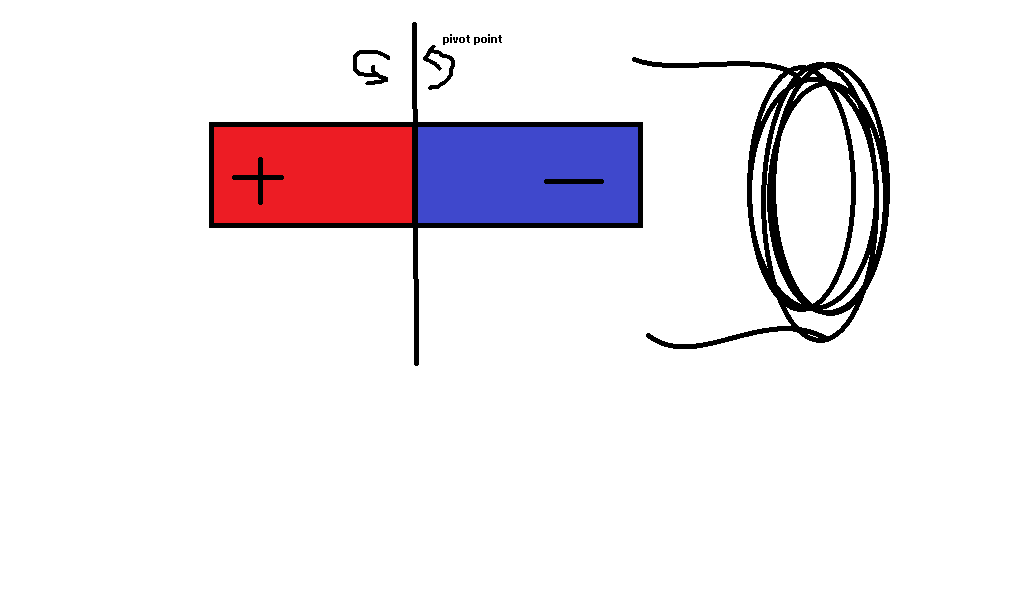
In a simple generator you have a coil of wire and a magnet with defind north and south poles (such as a rectangle magnet). If you rotate the magnet close to the coil(s) a small electrical current will be produced from the leads coming off the coil(s).
There are no confines when it comes to how to build a usable generator. You can take a 20 oz bottle with a magent inside that has an axle through the center and coil the wire around the bottle and rotate the magnet.My intent is to not give directions on contruction but only principle.There are more complex or more basic ways to construct one so play around with it and post them in the comments.
Wednesday, October 9, 2013
How to build a simple handheld EMP device.
An EMP (Electromagnetic pulse) can and will ruin electronics so BE CAREFUL!!!!!!!!!
Materials needed:
1 disposable camera
3-5 feet of insulated copper wire (about the same gauge as the average speaker wire will do)
1 metal rod (or non-metal,but metal delivers better results.Best to use iron.)
Tools needed:
Wire cutters
Soldering gun and solder
Maybe some electrical tape
Preparing the Camera:
This is fairly simple.I suggest removing the battery then pressing the shutter button to make sure that the flash capacitor is discharged.
Then you just have to remove the flash bulb.I do this by taking my wire cutters and cutting both sides of the bulb where the glass ends and the metal begins.
What we are trying to accomplish here is to use the bulb leads as our solder points for the coil we will later attach.
Constructing the coil:
Grab your metal rod which should be about 2-3 inches long and anywhere from 1/2 to 1 inch in diameter.
Leaving yourself a lead of about 3 inches, begin winding your wire around the rod.keep the coils tight.make sure to leave yourself a lead on the other side that measures 3 inches.It might be helpful,once done winding, to wrap a little electrical tape around the coil.
Putting it all together:
Just solder one lead to from the coil to one lead from the flash and solder the other lead from the coil to the other lead of the flash.
Replace battery.
press the flash button to charge the capacitor.When you press the shutter button,if done properly, it will produce an EMP.
Testing:
Find an old piece of battery powered electronics that you won't miss,such as a calculator, and charge your device by pressing the flash button,hold the coil close to the calculator, then press the shutter button................................The calculator should have gone off and may not come back on.If not check your handy work.
Horseshoe regulations and rules
- RULE 9 - PITCHING ROTATION DURING THE GAME
- Section A.
- If the game is to be played under cancellation scoring, there are two ways to determine who shall pitch first in the next inning once the game has started. The method to be used shall be determined before play begins.
- 1. The contestant who scored in the preceding inning shall pitch first in the next inning. If neither pitcher scores,the contestant who pitched second (last) in the preceding inning shall pitch first in the next inning.
- 2. Alternate Pitch - Alternate first pitch is used to guarantee each contestant an equal amount of first and second pitches during a game. It can be done in three ways. If the game is to be played to a shoe limit, it is recommended that the limit be a number divisible by four.
- a. One contestant shall pitch first in innings 1, 4, 5, 8, 9, 12, 13, 14, 15... until the game is completed. (This is the fairest, and recommended,way.)
- b. One contestant shall pitch first in innings 1, 2, 5, 6, 9,10, 13, 14... while the other contestant shall pitch first in innings 3, 4, 7,8,11, 12, 15, 16... until the game is completed.
- c. One opponent shall pitch first from one end and the opponent shall shall pitch first from the other end.
- Section B
- Any game played using count-all scoring shall be played under an alternate pitch format found in Section A, 2 above.
- Section C
- Any game played under any kind of handicap system shall use an alternate pitch format.
- Section D
- If it is discovered during an inning (before all four shoes are pitched) that the wrong contestant has pitched first, the shoes pitched so far in that inning shall be picked up and the inning shall be repitched. If the error is not discovered until after all four shoes have been delivered, they shall be scored as they lay and the correct rotation shall be re-established for the rest of the game.
- RULE 10 - DOUBLES PLAY
- In doubles play, two contestants are partners against another team of two contestants. One contestant from each team shall be at each end of the court and the contestants shall be matched by the tournament officials to that the highest rated contestant (by percentage) from each team shall be at the same end. The tournament committee shall determine the length of game and type of play and the scoring shall be done on one score sheet, just like for singles play. When contestants are pitching their shoes, the contestants at the other end shall be well behind and to the side of the pitcher's box (for their own safety) and in a stationary position so as not to disturb the contestants on their own and adjacent courts. Otherwise, all rules for singles play shall apply.
- Section A Regular Doubles
- In regular doubles, each team uses one pair of shoes and the contestants stay at the same end of the court for the entire game. To begin the game, the highest rated contestants shall decide first pitch and pitch their shoes, just as in singles competition. Their partners at the other end shall decide and call the score, retrieve the shoes and pitch them back and the same procedure is followed. The decision on who pitches first in each inning is contingent upon the scoring system being used, following the rules of singles play.
- Section B Walking Doubles
- In walking doubles all contestants pitch their own shoes. The highest rated contestants will decide first pitch and pitch their four shoes from the official designated starting end to start the game. A single score sheet shall be used that clearly shows the ringers and shoes of each contestants.
1. When a shoe limit game is scored after each eight (8) shoes (double inning), the lowest rated contestants will decide first pitch and pitch their four (4) shoes. After all eight (8) shoes have been pitched contestants walk to the other end, decide on the scoring, and pick up their shoes. The highest rated contestants always pitch first and their score is recorded first after each set of eight (8) shoes. The decision on which contestant pitches first in subsequent innings is contingent upon the scoring system being used following the rules of singles play. This procedure continues until the game is over.
2. When a point limit game is scored after each inning four (4) shoes, the lowest rated contestants determine the score of the four (4) shoes their partners pitched. The partner of the scoring contestant (or the last contestant who pitched in case of a no score situation) calls the score and pitches first. After all eight (8) shoes have been pitched the contestants walk to the other end. The highest rated contestants pick up their shoes (already scored) and step back. The score of the last four (4) shoes pitched is determined and called to the scorekeeper. The contestant calling the score always pitches first. This procedure is continued until the game is over. For safety or other reasons, the tournament director or committee may effect an alternative walking sequence as long as the proper scoring sequence stays the same. - RULE 11 - APPROPRIATE NHPA MEMBER CONDUCT>
- Section A. On the Courts
- An NHPA member, while in competition, shall make no disturbing noises or movements that would distract the opponent or competitors on adjacent courts. The first offense shall call for a warning from the judge or tournament official. A second offense shall call for a forfeiture of the game being played. Any further offenses shall call for a forfeiture of all games.
- Section B
- Any NHPA member who indulges in heckling, unfair rooting, or any other form of unsportsmanlike conduct toward any NHPA member or tournament official, shall be subject to expulsion from the tournament and the tournament site. This covers any inappropriate behavior (including profane or abusive language) in, or around, the court area. The member shall also be subject to a one year suspension from the NHPA.
- RULE 12 - TOURNAMENT PLAY
- Section A
- The standard method of NHPA sanctioned tournament play is round-robin play with contestants being seeded into classes. Each contestant will play every contestant in the class.
- Section B
- At the end of round-robin play, class winners shall be determined by win-loss records or ringer percentage. In addition, total points may be used if the scoring was done using the count-all method. If ties occur, they shall be settled by playoff, who-beat-whom or one of the other methods that was not used to determine the winner. The tournament committee shall decide how winners are to be determined and how ties are to be broken and announce these procedures before tournament play begins. If playoff games take place, the method of play and the length of the games shall be decided by the tournament committee.
- Section C
- A contestant's ringer percentage shall be determined by dividing the total number of ringers by the total number of shoes pitched. Shoes pitched in playoff games and in extra innings pitched because of tie games shall be included in these totals.
- Section D
- The rules used to seed contestants in all NHPA sanctioned tournaments are found in Articles X-XII of the NHPA Bylaws. In addition, rules regarding game length and format and tie-breaking situations in State, Regional,National, and World Championship play are found in the same Articles. The NHPA Dress Code for World Tournament play is found in Article X. It's use is encouraged, but not required, for all NHPA sanctioned play.
- Section E Handicapping
- Handicapping may be used in open tournaments and league play. The amount of the handicap shall be determined by the tournament committee. Game handicapping shall not be used in any World, National, or Regional Tournament or in the championship class of a designated division of any State Championship Tournament.
- RULE 13 - TOURNAMENT AND SANCTIONED LEAGUE ADMINISTRATION
- Section A
- All NHPA sanctioned tournaments and leagues shall have a designated committee or director to administer the activities. The committee or director shall:
- 1. Publicize the event.
- a. Announce the date, place, entry fee, prize list, registration deadline, and any other information a member will need in order to participate.
- b. Announce classifications available to entrants.
- c. Announce the method of play (cancellation or count-all), the length of the games (how many shoes or points) and whether or not alternate pitch will be used.
- d. Announce the method to be used for handling ties for individual games and at the end of round-robin play.
- 2. Obtain verifiable ringer percentages from NHPA charter statisticians (or NATSTATS) for all entrants.
- 3. Set up the playing format, assign contestants to their proper courts and provide contestants with a schedule of games to be played.
- 4. Make sure all entrants are NHPA members.
- 5. Arrange for scorekeepers for each court and for their remuneration. The method and amount of pay shall be announced before play begins.
- 6. Have statisticians available for the compilation of tournament results.
- 7. Have judges available.
- 8. Handle all protests and make the final decisions on any items that may come up.
- 9. Make the decision to halt play because of inclement weather and decide when play shall continue if conditions improve.
- 10. Make the awards and presentations at the end of play.
- 11. See that the results are sent to the charter statistician (and NATSTATS) for proper recording.
- Section B Judges.
- 1. Judges shall be appointed by the tournament committee. Their duties are:
- a. To enforce the rules and issue the proper penalties if violations occur.
- b. To measure for ringers, the closest shoe to the stake and shoes in count when asked to do so by the contestants.
- c. To help make the proper decision in situations involving broken shoes, broken stakes, shoes and stakes moved by contestants during measurements, shoes pitched out of turn and a contestant's shoes mistakenly pitched by the opponent.
- d. To act as a liaison between the contestants and the tournament committee in all possible situations.
- 2. The decision(s) made by judges in 1,a-c above shall be accepted as final by the contestants and the game shall continue on from that point.
Saturday, October 5, 2013
How to put a lawn mower tire on the rim and inflate.
Not always the easiest thing to do at home by yourself.
The First thing you want to do is use a wire brush and clean the part of the rim that the tire is going to contact.Then you could apply a little oil or W-D 40.
You need 2 flat head screw drivers and a hammer.first lay the tire flat on the ground and sit the tire on the rim at an angle.
To work the first bead over the rim you need to use your feet or knees and apply pressure downward on the tire while taking your 2 screw drivers and prying the bead over the rim little by little.All the while keeping pressure on the tire until the bead is over the rim.
Now that you have done that you still have one more bead to get over the rim.This bead will be pried on the same way.It is sometimes useful to use a hammer and slightly tap the bead down onto the rim.
With the tire now on the rim it just needs to be inflated!!!
What I always do is put one foot on the rim while pulling up on the tire as hard as I can to make sure one side is sealed.
Then I usually take a 4 ft. piece of rope and go along the outside of the tire compressing the tire to spread the beads so that there is no gap between the rim and the tire so that it will hold air while pumping it up.
Now all you have to do is pump the tire up.Remove the rope before completely inflating.
Subscribe to:
Posts (Atom)